









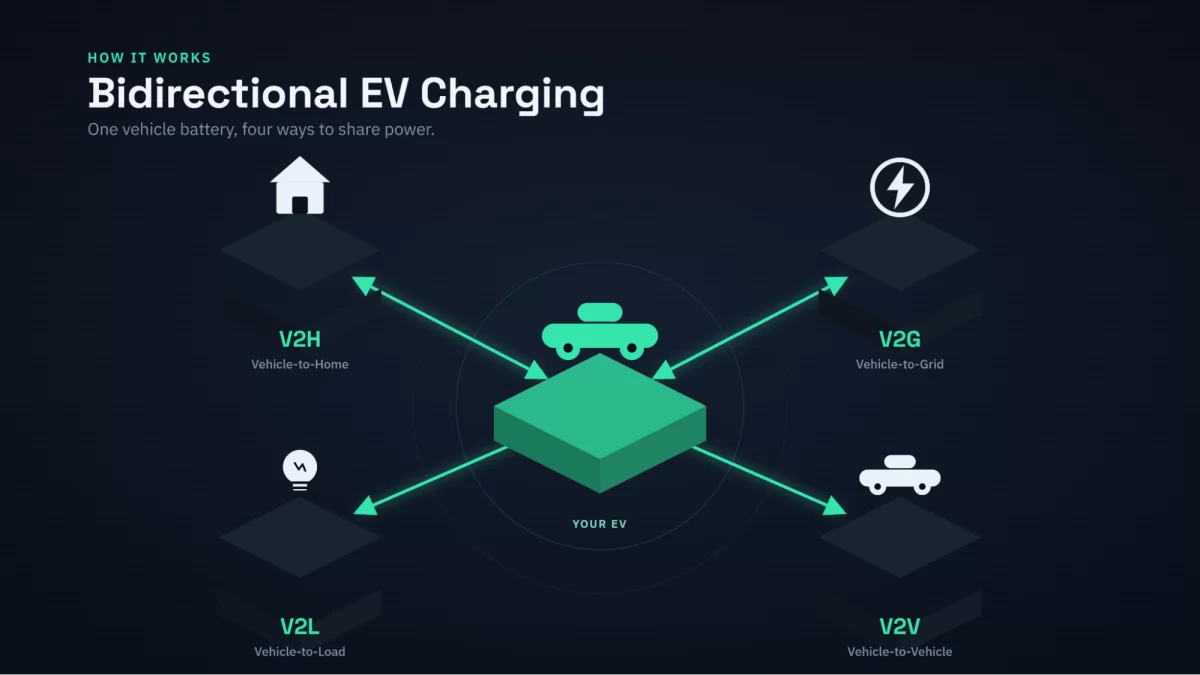
Bidirectional charging is one of the most exciting developments in the EV world, and in 2026, it is finally moving from niche technology into everyday reality. Your EV battery becomes far more than a way to get from A to B. It turns into a powerful energy asset that can power your home, support the grid, and even earn you money.
In this guide, we explain what bidirectional charging actually means, how each type works (V2G, V2H, V2L, and V2V) and whether it is worth investing in right now.
Let's get plugged in.
What does bidirectional charging mean?
Bidirectional charging means energy can flow both into and out of an EV battery. Your EV can charge from the grid or solar panels, then send stored power back to your home, the grid, or other devices when needed. In other words, it works like a large power bank on wheels. For this to work, the EV and charger need bidirectional power conversion, which turns the battery’s DC power into AC power that can be used safely.
The four types of bidirectional charging
V2G, V2H, V2L, and V2V all rely on the same two-way concept. The difference is simply where the energy goes and who benefits from it.
V2G (Vehicle-to-Grid)
V2G is the most talked-about form of bidirectional charging, and it is the one that can actually put money back in your pocket. With V2G, your EV sells stored energy back to the grid during peak hours when power is expensive, then charges back up cheaply when demand drops, often overnight or when renewables are producing a surplus.
The benefit goes beyond your wallet. V2G helps keep the grid balanced by matching supply and demand. Your EV charges when demand is low and feeds energy back in when demand peaks, which eases strain on the network and reduces reliance on fossil fuel generation.
V2G is also becoming easier to access. The CCS2 connector used by most modern EVs is gaining bidirectional capability through the ISO 15118-20 communication standard, so expect far more V2G-ready cars and chargers to arrive over the next few years. To use it today, you need a bidirectional charger and a compatible EV.
V2H (Vehicle-to-Home)
V2H lets your EV power your house directly. The energy you stored cheaply overnight, or pulled from your own solar, runs your home instead of going to the grid.
The big draw is backup power. When the grid goes down, a charged EV keeps your home running for a day or more, because your car holds several times the energy of a typical home battery.
It saves you money too. Charge when power is cheap, then run off the car during the pricey evening peak. And since the energy never leaves your property, V2H faces fewer rules than V2G, so it is reaching homes sooner.
V2L (Vehicle-to-Load)
V2L is the easiest one to use. Your EV powers appliances, tools, or devices straight from an onboard socket directly, just like a portable generator. Common uses include:
- Running a fridge or other appliances on a camping trip
- Powering tools on a job site
- Keeping essential devices on during an outage
The best part is you do not need a bidirectional wallbox at all, because the car has its own built-in inverter and socket. The catch is that this power is not synced with the grid, so it is for standalone loads, not for running your whole home.
V2V (Vehicle-to-Vehicle)
V2V lets one EV share power with another. If a nearby car is running low, a V2V-capable vehicle can transfer some of its charge, a bit like jump-starting a friend but with real driving range. It is the least common application today, yet it is useful for roadside help and for fleets where cars balance charge among themselves.
ESYsunhome's Bidirectional EV Charger
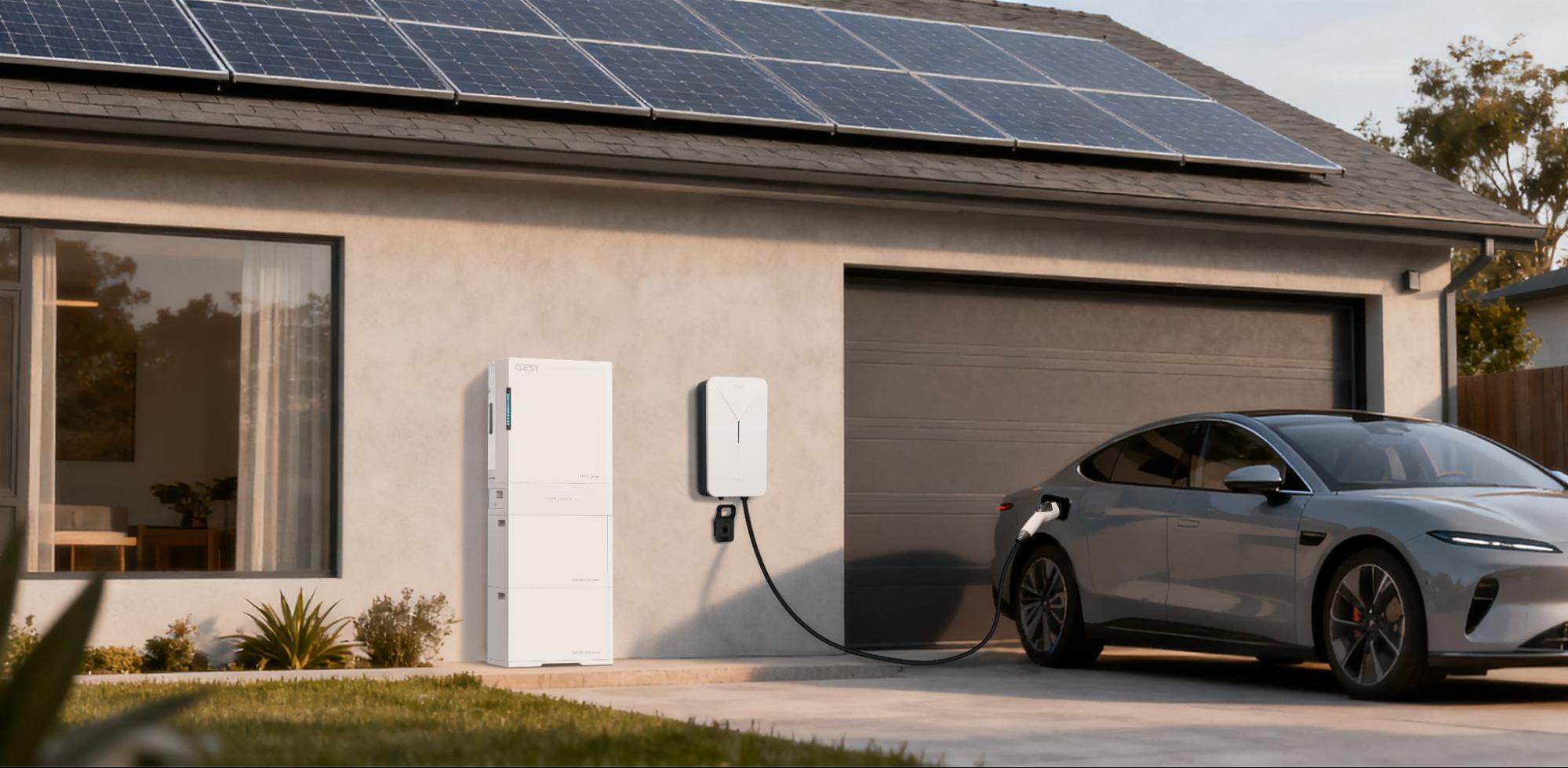
Bidirectional EV charging is gaining traction because a growing fleet of electric vehicles represent a vast, mostly idle store of battery power that homes and grid can now draw on. With EVs a quarter of new car sales globally in 2025, letting energy flow back out turns each EVs into energy sources that trim peak demand or provide backup power during outages.
We built our bidirectional EV DC charging solution around those exact problems. It links your EV, solar, and home battery into one system, moving DC power directly between them, and supports both V2H and V2G. In plain terms, you charge the car from your own solar, keep the surplus, and lean on it through the expensive evening hours, so your bill drops and your home stays powered when the grid does not.
Up to 22 kW DC output power
The charger puts out up to 22 kW of DC power. That gives you fast charging when you need range in a hurry, and enough muscle for the car to actually run your home during an outage, not just a slow trickle. So when the grid drops, your fridge, lights, and Wi-Fi keep going on the energy already sitting in your car.
Solar first, grid as backup
Green-power mode charges your EV from your own solar first, then pulls from the grid only when the sun falls short, at around 97% peak efficiency. That means more of the energy in your car is clean and already paid for, so you stop selling solar cheap by day and buying it back at peak rates by night. It will reduce the running costs and you can make better use of your own electricity. For whole-home backup and bigger loads, it pairs with a three-phase all-in-one energy storage system, so your EV, panels, and battery work as one. For the full picture, start with our overview of how solar, storage, and charging work together.
Conclusion
Bidirectional charging means your EV can send power out, not only take power in. For homeowners, V2H is usually the most practical starting point because it can help power the house during outages and make better use of stored energy.
V2G also has its place, but they depend more on vehicle support, local rules, and how you plan to use the car. Before you commit, check that your EV supports bidirectional charging, choose a compatible bidirectional charger, and confirm your local utility requirements.
FAQs
Can a bidirectional EV charger power the house?
Yes, if the system is designed for V2H backup. The EV, charger, electrical panel, and transfer equipment all need to work together. For larger appliances, you may still need load management.
How long can an EV power a home?
It depends on battery size and home energy use. Basic loads like lights, Wi-Fi, and a fridge may run for a day or more. Heating, air conditioning, and cooking appliances will drain the battery much faster.
Does bidirectional charging work during a blackout?
Yes, with the right V2H setup. The system must safely disconnect your home from the grid before sending power from the EV.
Will V2H leave my EV without enough driving range?
It should not if you set a battery reserve. Most systems let you keep a minimum charge level for driving. Raise that reserve before long trips, storms, or heavy backup use.