









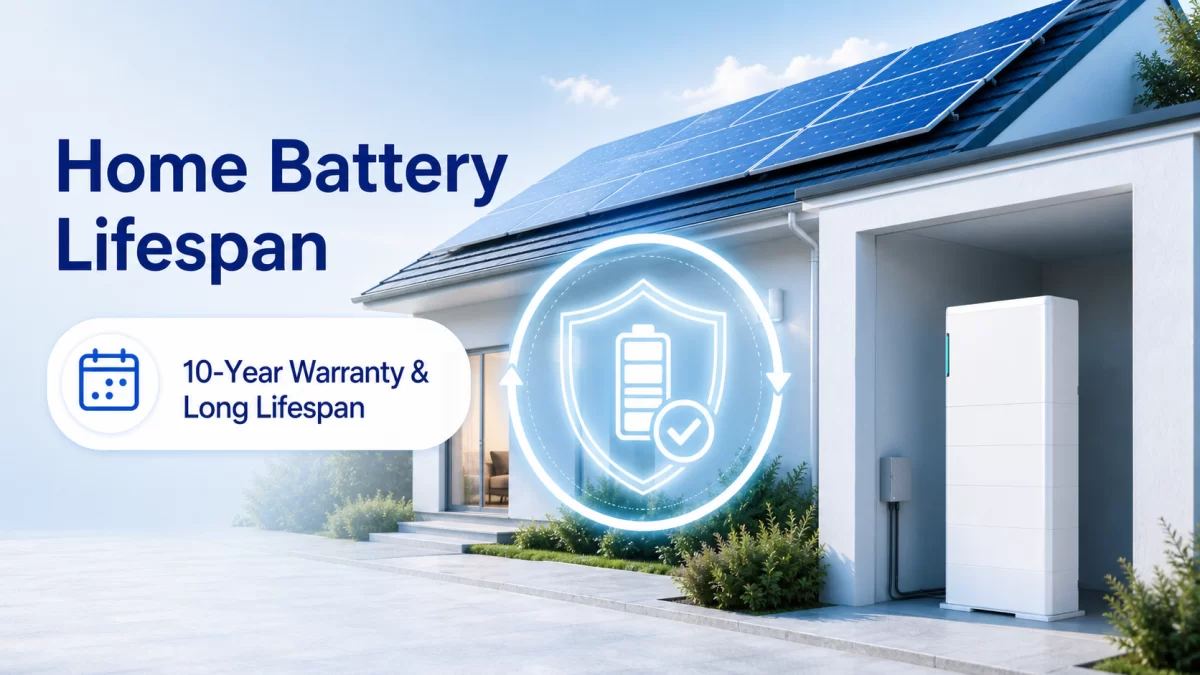
A quality lithium iron phosphate home battery, the LFP type used in most residential systems today, typically lasts 10 to 15 years, and many keep performing well beyond that. In cycle terms that usually means somewhere around 6,000 full charge and discharge cycles before the battery settles to roughly 70 to 80 percent of its original usable capacity. For most homeowners, 10 to 15 years is a realistic figure for how long a home battery lasts. As more homes add battery storage, real lifespan has become a key buying factor, and U.S. residential battery capacity rose by more than half in 2025 according to the Solar Energy Industries Association.
Battery Lifespan Vs Warranty Period
To compare home batteries properly, you need to look at two separate factors: service life and warranty coverage.
Battery Lifespan
Battery lifespan is how long a battery stays useful before it can no longer hold enough energy to do its job well. It’s usually described in two ways: calendar life or cycle life. Calendar life is the number of years a battery can function under standard conditions, and most modern lithium home batteries are rated for about 10 to 15 years. Cycle life refers to the number of full charge-and-discharge cycles a battery can complete before its usable capacity drops to a set threshold. Lithium Iron Phosphate batteries generally range from 3,000 to 5,000 cycles. Our home batteries are rated for at least 6,000 cycles at 25°C before their state of health (SoH) declines to 70%.
Warranty Period
The warranty period is the manufacturer’s written coverage period, not the same as the battery’s full service life. In the residential battery market, a 10-year warranty is common. A battery warranty usually defines the minimum capacity the battery should retain by the end of the warranty term and explains when the manufacturer will repair or replace a unit that fails under normal use. Some warranties might include usage limits, such as lifetime energy throughput, so the battery may be covered for 10 years or until it reaches a specified energy total, whichever comes first. Warranty terms are also country-specific. In Australia, ESYsunhome’s residential batteries carry a 10-year warranty and are guaranteed to retain at least 70% of available capacity by the end of that term.
Typical Warranty Pitfalls for Home Battery
Warranty coverage usually depends on whether the battery is installed and operated according to the official manuals. The main avoidable risks are a poor installation position and using the battery outside its approved temperature range.
Poor Installation Position
The installation position affects ventilation, safety, service access, and warranty compliance. Before installation, check that the site meets the product manual and local code requirements, such as:
- Clearance and ventilation: leave enough space around the unit for airflow and service access.
- Mounting surface: use a solid, stable, non-flammable wall or base.
- Outdoor protection: avoid direct rain, standing water, and long-term direct sunlight, even when the enclosure is outdoor-rated.
- Safety distance: keep the battery away from exits, ignition sources, and restricted areas as required by the manual.
Low/High Temperature
Temperature affects battery output, charging behavior, and long-term capacity retention. High heat can accelerate cell aging, while low temperatures may cause the system to reduce power or limit charging to protect the battery.
Install the unit in a shaded, ventilated location and keep it away from heat sources, freezing conditions, and spaces with large temperature swings. Always follow the operating temperature range in the product manual, because approved limits can differ by model.
Maintenance Tips to Extend a Home Battery’s Life
Home batteries require little day-to-day maintenance, but correct operating habits can slow capacity loss and help maintain warranty coverage.
- Maintain a suitable operating temperature. Keep the battery shaded, ventilated, and away from heat sources.
- Avoid repeatedly draining the battery to 0%. Keeping a small reserve charge reduces cell stress and supports longer cycle life.
- Do not leave the battery fully discharged for months. If the system is switched off or stored, recharge it within the period specified in the ESY SUNHOME user manual. A battery left at 0% for months may lose capacity permanently or need service before it can restart.
- Keep system monitoring active. ESY SUNHOME monitoring helps track system status, temperature, alerts, and communication issues. If remote monitoring is required by the warranty, keeping the system online also helps maintain compliance.
- Schedule service checks. Have your installer or service team inspect the system at the interval recommended in the user manual. Key checks include electrical connections, mounting hardware, ventilation clearance, communication status, error logs, and firmware version. Keeping firmware updated lets the system run the latest safety, monitoring, and compatibility improvements.
Conclusion
A home battery’s lifespan depends on its chemistry, cycle life, operating temperature, installation quality, and warranty usage limits. For most homeowners, a well-sized LFP battery can provide reliable storage for 10 to 15 years when installed correctly, monitored properly, and used within recommended operating conditions. Before buying, compare capacity retention, warranty terms, energy throughput, and backup needs to choose a system that can support both current and future home energy use.
FAQs
How long does a home battery last?
A quality LFP home battery typically lasts 10 to 15 years, and many keep performing well beyond that when installed correctly and kept within recommended operating conditions.
What’s the difference between calendar life and cycle life?
Calendar life is how many years a battery works under standard conditions, about 10 to 15 years for modern lithium home batteries. Cycle life is how many full charge-and-discharge cycles it can complete before its usable capacity drops to a set threshold.
Is the warranty period the same as the battery’s lifespan?
No. The warranty is the manufacturer’s written coverage period, not the battery’s full service life. A 10-year warranty is common, and some also add usage limits like lifetime energy throughput, covering the battery for 10 years or a set energy total, whichever comes first.
Does temperature affect battery life?
Yes. High heat can accelerate cell aging, while very low temperatures may cause the system to reduce power or limit charging. Installing the unit in a shaded, ventilated spot within the manual’s approved temperature range helps protect long-term capacity.
How do I keep my home battery healthy?
Keep it at a suitable temperature, avoid repeatedly draining it to 0%, don’t leave it fully discharged for months, keep system monitoring active, and schedule the service checks recommended in the user manual.