









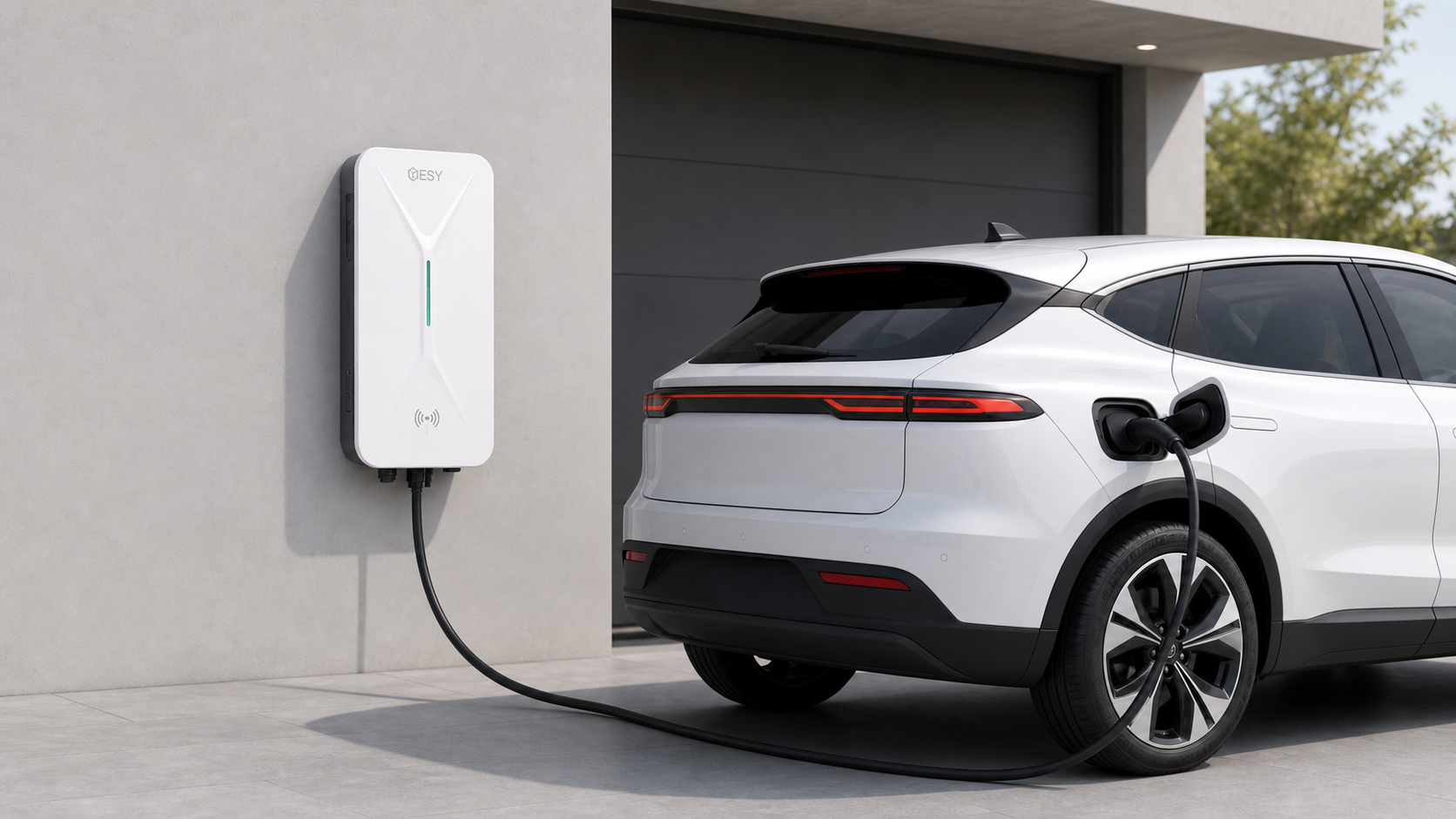
The EV industry is moving fast. Sales are climbing, automakers are launching more electric models, and charging networks are expanding to keep pace. Both AC and DC power keep EVs on the road, but charging speed is what often decides whether driving electric feels practical. That is why DC fast charging has become one of the main ways to reduce range anxiety.
So why is DC charging faster than AC? In simple terms, a DC EV charger converts AC power into DC, then sends it directly to the battery. This bypasses the car’s built-in smaller onboard charger, which is what usually limits AC charging speed. Below, I’ll break down the real-world speed difference, the hardware behind it, and when DC charging is worth choosing over AC.
What’s the difference between DC and AC charger
Every EV battery stores energy as direct current, or DC. The grid, your home panel, and a normal wall outlet supply alternating current, or AC. Before electricity can be stored in the battery, AC power has to be converted into DC power. The main difference between an AC charger and a DC charger is the place where that conversion happens.
With an AC charger, the charging unit sends AC power to the vehicle. The car’s onboard charger converts that AC power into DC before it reaches the battery. This is the setup most people know from home wall boxes and workplace chargers.
With a DC charger, the charging unit does the conversion before power reaches the vehicle. It sends DC power to the car, and the vehicle manages how that power enters the battery. This is the basic technical difference between AC and DC charging.
The U.S. Department of Energy uses the same distinction when it classifies EV charging: Level 1 and Level 2 charging are AC, while DC fast charging is a separate category. You can see the full breakdown on the Alternative Fuels Data Center’s charging page.
| AC charger | DC charger | |
|---|---|---|
| Where AC becomes DC | Inside your car (onboard charger) | Wall-mounted |
| Speed | Slower, built for overnight | Fast, built for short stops |
| Unit size & cost | Compact, cheaper | Larger, pricier electronics |
| Best fit | Home overnight, workplaces | Fast turnaround |
Why DC charging is faster than AC
DC charging is faster for a simple reason: an EV battery stores DC power, and a DC charger sends DC power to the vehicle directly. The charging unit handles the AC-to-DC conversion before power reaches the car, so charging is no longer limited by the vehicle’s smaller onboard charger.
In real charging systems, the speed advantage mainly comes from two factors:
- A shorter power path. AC charging sends grid AC to the car first, then the onboard charger converts it into DC for the battery. DC charging does that conversion inside the charger and sends DC power to the vehicle, which reduces conversion steps and helps improve charging efficiency.
- A higher power level. Most AC charging is limited by the onboard charger, often around 7 kW to 11 kW, with some vehicles supporting 22 kW. DC chargers use larger power electronics and can deliver much higher output, from lower-power DC units to high-power public fast chargers.
This is why AC charging works well for overnight parking, while DC charging makes more sense when the vehicle needs a meaningful top-up in a shorter stop.
When a DC charger makes more sense than an AC charger
Choose a DC charger when charging speed, energy control, or backup power has real value. There are some cases:
- Short parking windows. If the car only stops for 30 to 60 minutes, AC charging may add too little range. DC charging gives the driver a useful top-up in the same window.
- Fleet or business use. Delivery vans, service vehicles, and company cars lose money while they sit charging. DC charging cuts downtime and keeps vehicles on schedule.
- Solar plus home storage. Homes with solar panels and batteries already manage DC power. A DC-coupled charger can move energy between solar, storage, the house, and the car with fewer conversion steps.
- Backup power and peak-rate control. If the EV needs to support the home during an outage or high-rate period, bidirectional DC hardware is required.
AC charging just works well for simple overnight charging. The problem starts when the car needs a faster top-up, solar energy is wasted or sold back cheaply, the grid goes down, or work vehicles spend too much paid time waiting on a charger.
Our EV22 V2E is a 22 kW bidirectional DC charger built for those situations. It delivers faster home DC charging, supports vehicle-to-home power, and works with a home battery system to connect solar, storage, the house, and the EV through a more efficient DC-coupled setup. For a deeper look at backup power and peak-rate use, see how a bidirectional EV charger supports V2H and V2G.
Is DC fast charging bad for EV batteries
DC fast charging is not automatically bad for an EV battery. A single fast charge has limited impact on most modern EVs because the BMS controls temperature, voltage, and current during charging.
The real risk comes from long-term habits. Frequent high-power fast charging can create more heat and may speed up battery aging over time, especially when the battery is already hot or kept near 100% for too long.
- Keep daily charging around 20% to 80% when possible.
- Use 100% charging mainly before long trips.
- Avoid fast charging a hot battery right after hard driving.
- Use reliable chargers with stable voltage and current control.
Power level matters too. A 22 kW home DC charger is much gentler than a 350 kW highway fast charger, because lower power creates less heat and puts less stress on the battery.
Conclusion
DC charging is faster than AC because the charger converts AC power into DC before it reaches the vehicle, then sends power directly to the battery. This bypasses the car’s onboard charger and allows higher charging power. DC charging makes more sense when you need faster top-ups, better solar and battery integration, fleet turnaround, or vehicle-to-home backup power. With the right charging habits, modern EV batteries can handle DC charging well.
FAQs
Can a DC charger be installed at home?
Yes, with the right electrical setup. High-power public DC chargers need heavy commercial infrastructure, but lower-power home DC chargers are more practical for homes with solar, battery storage, or vehicle-to-home needs.
Is a 22 kW DC charger faster than a normal home AC charger?
Usually yes. Most AC home charging is capped by your car’s onboard charger, commonly 7-11 kW, occasionally 22 kW. A DC charger does the AC-to-DC conversion itself and sends DC straight to the battery, bypassing that onboard charger, so it isn’t limited by it.
Is DC fast charging bad for my battery?
A single fast charger isn’t a problem for most modern EVs. The battery management system controls temperature, voltage, and current throughout. The risk is from long-term habits: frequent high-power charging or sitting near 100% for long periods.
How should I charge day to day to protect the battery?
Keep everyday charging roughly between 20% and 80%, save 100% for right before long trips, avoid fast charging immediately after hard driving when the battery is hot, and use a charger with stable voltage and current control.