









A residential energy storage system stores electricity so your home can use it later, especially after sunset, during peak-rate hours, or when the grid goes down. When comparing energy storage systems for homes, the key is to start with daily life: which appliances matter most, how much evening power your solar system can cover, how long backup power should last, and what support is available after installation.
Before a site survey, homeowners should already have a basic picture of their backup loads, solar production, evening demand, installation space, and support expectations. Those details shape the right battery components, retrofit or new-system path, kW and kWh sizing, backup design, smart energy settings, warranty review, and aftersales plan.
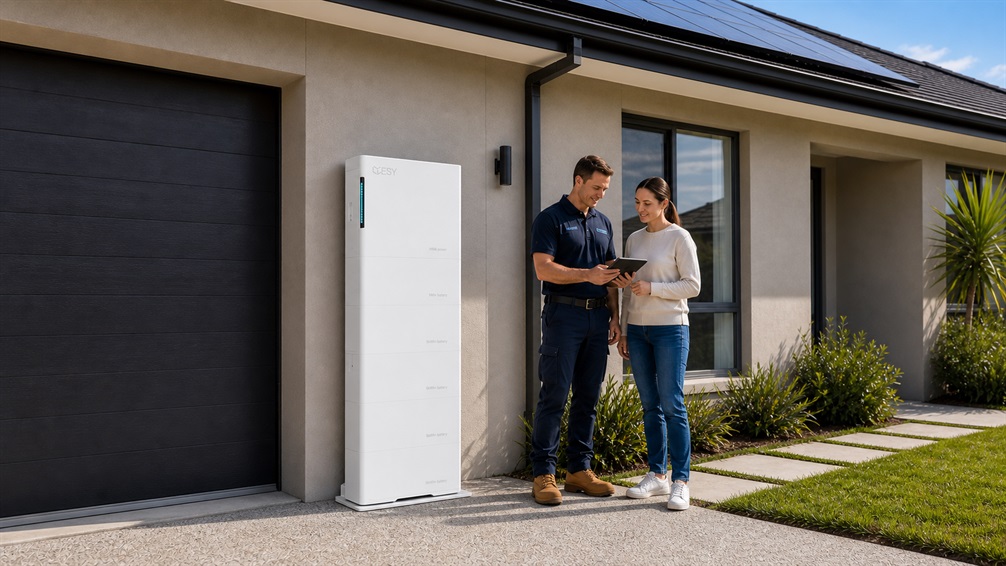
What’s a residential energy storage system
A residential energy storage system is a home-scale battery setup that stores electricity and releases it when the house needs power. It can work with rooftop solar, charge from the grid where local rules allow, and keep selected home circuits running during an outage. It follows the same basic idea as a battery energy storage system, but it is sized and configured for household use.
Think of it as a power reserve for the home. During the day, extra solar power can go into the battery. Later, the inverter turns that stored energy into AC power for lights, appliances, Wi-Fi, pumps, or other selected loads. That is why the same system can support evening solar use, backup power, tariff scheduling, and better visibility into household electricity use.
Core components
When reviewing a residential ESS quote, the clearest path is to check what stores energy, what converts power, what protects the battery, and what controls the system:
- Battery modules store energy and define the available kWh capacity.
- The inverter converts battery DC power into AC power for home appliances and sets the available kW output.
- The battery management system monitors cell voltage, temperature, current, and state of charge.
- The energy management system coordinates charging, discharging, backup reserve, grid interaction, export settings, and app data.
After those four checks, look at how the chosen model packages the hardware for installation. On the official HM pages, the all-in-one residential ESS structure is shown around the inverter, battery modules, base, and model-specific connection hardware such as a connector or distribution box. For model-level paperwork, homeowners can review the home ESS datasheets and manuals before the site design discussion. Backup switching, grid connection, monitoring setup, and protection details should be confirmed during site design because they relate to the selected model, home wiring, and local grid rules.
How it works
A solar-plus-storage system shifts electricity from the hours when it is produced to the hours when the home needs it. Solar panels serve daytime loads, surplus solar charges the battery, and stored energy can cover evening demand as solar production falls. The U.S. Department of Energy says storage helps homeowners use solar power when it is needed, including later in the day or during an outage.
During a grid outage, a backup-capable system isolates protected circuits from the utility grid before the battery supplies power through the inverter. This isolation protects utility workers and home equipment, so the wiring, backup circuits, and operating settings should be handled by a qualified installer. For homeowners, the practical result is that selected loads such as lights, refrigeration, internet, security, pumps, or medical equipment can keep running. Runtime is shaped by battery capacity, backup reserve, load size, and any solar recharge available during the outage.
Why homeowners are gradually adopting residential ESS
Residential storage becomes easier to justify when solar production and daily demand do not line up. Rooftop solar can generate strongly at midday, while cooking, laundry, heating, cooling, and EV charging often happen later. A battery keeps part of that solar energy at home and releases it in the evening, so less usable power is sent away during the day.
Electricity pricing can also make stored energy more valuable. Where time-of-use rates apply, the battery can reduce grid use during expensive hours. In markets where exported solar earns less than imported electricity costs, using more solar on site can make the system more practical.
Backup power adds another reason for adoption, especially in storm-prone areas, rural homes, or houses with medical and communication needs. The next step is to identify the loads that should stay on during an outage.
Retrofit or Add a new system
Retrofit projects begin with the equipment already in place. Homes with rooftop solar need a review of the existing inverter, meter setup, switchboard, available space, and local grid rules before battery storage is added. Some systems can accept storage with limited changes. Others need part of the solar and battery design revised so charging, discharging, and selected backup circuits work correctly.
New solar-plus-storage projects allow more of the design to be planned together. PV size, inverter output, battery capacity, backup circuits, EV charging interface, installation space, and monitoring can be considered before equipment is selected. Early coordination reduces later rework because the wiring path, energy flow, and app setup are based on the same household energy profile.
How much kW and kWh do you need
For home battery sizing, kW is the power limit and kWh is the stored energy amount. kW decides how many appliances can run at the same time or whether a larger load can start. kWh decides how long those loads can keep running before the battery reserve is used up.
A simple estimate is selected load kW x desired backup hours. The result is only an early kWh target because usable capacity, reserve settings, seasonal weather, solar recharge, and installer safety margins still affect the final size. Recent electricity bills, evening demand, peak-season loads, EV charging plans, and the backup level all need to be reviewed before equipment is selected.
The HM6 product page shows where a compact home system begins in our range, with 6 kW output, 5.12 to 30.72 kWh expandable capacity, IP66 protection, a -25 to 60 C operating temperature range, and a 10-year warranty. For homes with three-phase power, heavier evening loads, EV charging, or mixed residential use, HM10-H moves the sizing discussion higher, with 10 kW output and 10.54 to 94.86 kWh expandable capacity. Its specification table also shows IP66 protection, a -25 to 60 C operating temperature range, and a 10-year warranty.
Essential backup & Whole-home backup
Essential backup supplies selected circuits during an outage. Common choices include refrigeration, lighting, Wi-Fi, security, a garage door, a sump pump, or medical equipment chosen by the homeowner. This setup protects battery runtime by reserving stored energy for priority loads.
Whole-home backup brings heavier loads into the plan, such as central AC, heat pumps, well pumps, electric water heaters, and EV charging. These loads use stored energy faster and can create higher startup-power demand. The design discussion should separate loads that can run together from loads that can wait during an outage.
Long outages can expose the limit of any battery-only plan. Once the stored energy is used and solar recharge is limited, some homeowners begin comparing battery storage with fuel generators. The CDC generator safety guidance says portable generators should run outdoors, more than 20 feet from windows, doors, and vents, and never inside a home or garage. Battery storage avoids fuel handling and indoor exhaust risk, while a generator may still have a role where fuel planning, safe placement, and maintenance are handled properly.
Why software matters: smart energy management
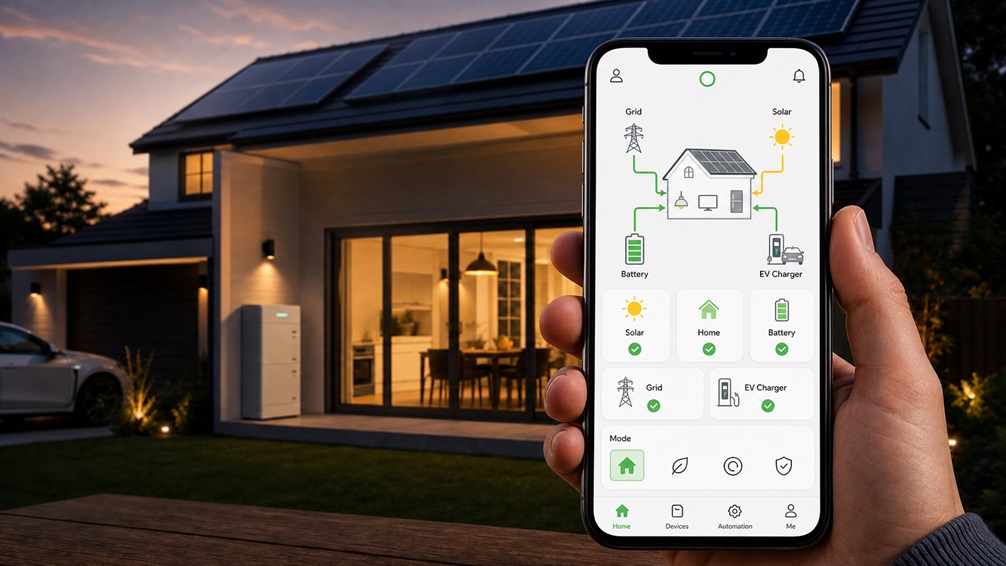
Smart energy management sets the rules for when the battery charges, when it discharges, how much energy stays available for backup, and how the system handles grid export or time-of-use rates. Battery percentage alone does not tell enough. Homeowners should be able to see where the power is coming from, where it is going, and whether the battery is saving energy for later use or backup.
In our app, real-time energy-flow diagrams show solar generation, home usage, battery status, grid import, and grid export. AI Mode works with PV generation, dynamic tariffs, and household load consumption to adjust energy use. Custom battery schedules and time-of-use settings let the system charge when electricity is cheaper or solar is available, then discharge when the home needs power. Anti-backflow control helps limit unwanted power export to the grid. Battery health monitoring and fault warnings make it easier to spot problems and ask for support with clear system data.
Native-speaking aftersales support, Warranty
Aftersales support should be part of the purchase decision, especially when the homeowner, installer, and manufacturer are in different regions. Before signing, the support route should be clear: who handles commissioning questions, who helps with app setup, where warranty documents are submitted, and how technical issues move from the installer to the manufacturer.
For our public support paths, homeowners can use the warranty page to check warranty materials by region, including Global, Italy, Germany, and Australia. The contact page lists support@esysunhome.com for technical assistance, along with regional Sales and Support contacts in Australia, Germany, and Italy. The local service route should still be confirmed with the installer, because response process, language support, and on-site service can vary by market.
What makes ESYsunhome different
For homeowners, the difference starts with how the system is planned. Our home solution pages connect solar generation, battery storage, EV charging, diesel generator integration, and app control as one home energy path. During design, self-consumption, backup, EV charging, tariff scheduling, and monitoring all affect the same battery, inverter, wiring, and software settings.
The HM range covers several starting points for installers. Single-phase models on the site include 5 kW, 6 kW, 10 kW, and 12 kW options in the 5 to 30 kWh class. Three-phase models include 10 kW, 15 kW, and 20 kW options in the 10 to 90 kWh class. This range helps match smaller essential-backup projects, larger whole-home designs, and homes preparing for EV charging or heavier evening loads.
The official HM6-10 case is listed in NSW, Australia. The Two HM6-25 case is listed with GP Solar in Victoria, Australia. The evidence sits at project-scope level: modular residential storage can be matched to different homes after local load review and installation planning.
Our About page states more than 20 years of industry experience, a 100,000 square meter production base, 4.5 GWh production capacity, a Top 5 BMS supplier background, and 800+ global employees. For homeowners, those facts help frame practical questions about product continuity, warranty handling, monitoring support, and service communication.
Conclusion: Is a Residential Energy Storage System Worth It?
A residential energy storage system is worth considering for homes that want to use more rooftop solar, keep essential circuits powered during outages, prepare for time-based electricity prices, support future EV or heat-pump loads, and see household energy use more clearly through software. The useful design discussion starts with four items:
- A recent electricity bill.
- Solar production data for homes with existing PV.
- A list of loads that must run during an outage.
- Photos of the switchboard and possible installation area.
To move from checklist to site review, use our find an installer page and prepare these four items for a residential ESS sizing discussion. The installer can then confirm kW and kWh, phase type, backup circuits, backup strategy, installation space, software settings, and local grid requirements before equipment is selected.