










From 1 January 2027, the Dutch government will end net metering for solar households. Exported electricity can no longer be offset against electricity bought later in the year. Exported power will still receive compensation from the energy supplier of at least 50% of basic electricity tariffs.
What net metering (salderen) is
Under salderen, households in the Netherlands can offset the electricity they generate against they use over the year, and they pay no tax on that balanced amount. Any surplus beyond their own use will be compensated. If a household exports 2,500 kWh in summer, it can later use 2,500 kWh in winter without paying supply charges, network costs or energy tax. That 1-for-1 offset is net metering. Any use above 2,500 kWh is billed in full.
Why net metering ends in one step in 2027
The government’s reasoning is mainly about cost, tax revenue and grid balance. Under the net metering system, part of the cost was shifted to customers without solar panels. The scheme also reduced energy-tax revenue and did not fully ease pressure on the grid. With solar panels now much cheaper than when the scheme was introduced, the government sees less need to keep this subsidy-style mechanism in place.
How solar export compensation works after 2027
After net metering ends, surplus solar electricity can still be exported, but it earns a terugleververgoeding instead of being offset against later grid purchases. Until 1 January 2030, the legal minimum is 50% of the bare electricity supply tariff — the supply price before energy tax and VAT. After that date the statutory floor falls away and the supplier sets the rate. The minimum does not create one nationwide export price.
The Dutch government’s policy page sets the minimum. ACM consumer guidance shows why the supplier contract still matters. A fixed contract follows the agreed export terms. A variable contract may adjust the amount at stated intervals. A dynamic contract can link compensation to current electricity prices, which may change by hour or quarter-hour.
What existing and new solar homes should do next
After 1 January 2027, exported solar power is significantly less than self-consumption. For many households with existing solar panels, the next step is adding storage; the hard part is adding that storage without replacing the old PV system.
Few brands make that retrofit simple. Many storage systems are DC-coupled, so they expect a matching hybrid inverter. That can mean replacing the existing inverter, reworking the PV string design, and paying for work the household did not need. ESYsunhome uses a both DC-coupled and AC-coupled design instead. The battery system connects on the AC side of the current PV system, so it can sit alongside third-party PV inverters and leave the existing solar installation in place.
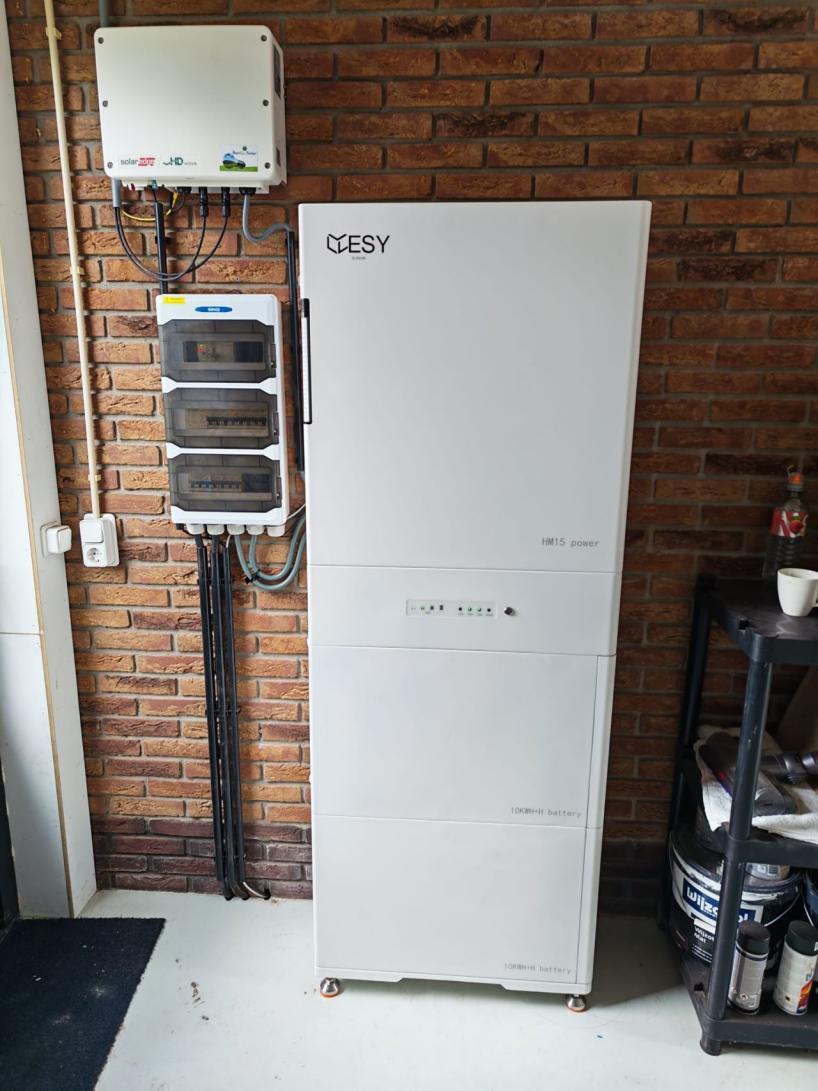
A fixed battery schedule is often not enough on a Dutch dynamic contract. Prices can change by the hour, and sometimes by the quarter-hour, so the cheap window is not the same every day. AI-based optimization matters because it decides when the battery should charge and discharge, instead of leaving that to the homeowner.
In one ESYsunhome case, turning AI Mode for an HM20-30 system on shifted grid buying away from the 7–10 p.m. peak. Estimated monthly grid spend on the same 928 kWh of imported power fell from about €325 to about €125. That was a control gain, not a bigger battery.
Frequently asked questions
When does net metering end in the Netherlands?
On 1 January 2027. Exported solar power can no longer be offset against electricity bought later in the year.
What is exported solar power worth after 2027?
You still receive a terugleververgoeding. Until 1 January 2030 the legal minimum is 50% of the bare supply tariff, before tax and VAT. After that, the supplier sets the rate. Self-consumed solar remains more valuable than export.
Do I need a home battery after salderen ends?
If you regularly export by day and use power later. A battery keeps that surplus for evening use instead of selling it cheaply and buying it back at the full import price.
Do I have to replace my existing solar inverter?
Not with an AC-coupled system. ESYsunhome can connect on the AC side of the current PV setup and work with third-party inverters, so the existing array can stay in place.
Conclusion
From 1 January 2027, salderen ends in one step. Exported solar power is no longer credited against later grid use. It still earns a terugleververgoeding at least 50% of the bare supply tariff until 2030, but that is significantly less valuable than electricity used at home.
For many solar households, the practical response is storage. A battery moves daytime surplus into the evening instead of selling it cheaply and buying it back at the full import price. That does not have to mean replacing the existing PV system. An AC-coupled ESYsunhome battery can connect beside a third-party inverter and leave the current array in place.