









Sistem BESS običajno traja od 10 do 15 let, zato je izbira dobavitelja ključna dolgoročna odločitev. Za oceno dobaviteljev BESS leta 2026 začnite s štirimi merili po vrsti: skladnost s predpisi, lokalna prisotnost in ugled, kakovost izdelkov in proizvodna zmogljivost.
Sistem za shranjevanje energije v baterijah je kapitalsko sredstvo z življenjsko dobo, ki se meri v desetletjih. Posel je velik in stroški so visoki. Sistem BESS deluje od 10 do 15 let, v celotnem obdobju pa je dobavitelj tisti, ki vzdržuje, podpira in dobavlja rezervne dele za sistem. V skladu z članek SolarQuotes, stroški domačih sončnih baterij se v Avstraliji gibljejo od $4000 do $13000.
Ključni dejavniki za ocenjevanje dobaviteljev BESS v letu 2026
Skladnost s predpisi
Varnostni, elektromagnetni, omrežni in drugi ustrezni certifikati so ključna merila za ocenjevanje dobavitelja BESS. Brez veljavnih, tržno specifičnih certifikatov izdelka ni mogoče zakonito namestiti, priključiti na omrežje, zavarovati ali odobriti za projekt, ne glede na njegovo ceno ali zmogljivost. Ker so zahteve glede skladnosti specifične za posamezno državo, se morajo kupci posvetovati z ustreznimi lokalnimi registri. V Avstraliji je mogoče odobrene izdelke preveriti prek Sveta za čisto energijo (Clean Energy Council). odobreni seznami izdelkov.
Lokalna prisotnost in ugled blagovne znamke
Lokalna prisotnost je ključnega pomena, saj BESS zahteva stalno tehnično podporo skozi celotno življenjsko dobo. Dobavitelj z usposobljenimi lokalnimi tehniki in regionalnimi skladišči lahko hitreje diagnosticira težave, izpolni garancijske obveznosti in vzdržuje delovanje sistema, zaradi česar so lokalne poprodajne zmogljivosti pomemben kazalnik dolgoročne zanesljivosti projekta in donosnosti naložbe. Seznam BloombergNEF Tier 1 je uporaben prvi filter za bankabilnost in količino pošiljke ter ne pove ničesar o kakovosti celic v vašem določenem vsebniku.
Zmogljivost sistema
Številke v podatkovnem listu so navedene pri 25 °C in nežnem ciklu. Vaša lokacija ni takšna. Povprašajte po zmogljivosti v celotnem temperaturnem območju in dnevnem profilu ciklov, ki ga bo sistem dejansko videl, ter po učinkovitosti delovanja na ravni sistema: ko PCS, pomožne obremenitve in toplotno upravljanje prevzamejo svoj delež, lahko številka na ravni celice rezultat popravi za nekaj točk. Nato primerjajte uporabno zmogljivost z izhodno močjo, ki jo potrebujete, in jo ohranite v letih, ko jo potrebujete, ter potrdite, da se sistem pogovarja z opremo, ki je že na lokaciji, in pušča prostor za načrtovano širitev.
Revizija tovarne
Proizvodna zmogljivost je pomembna, ker certifikati in specifikacije izdelkov sami po sebi ne kažejo, ali lahko dobavitelj dosledno dobavlja varne in visokokakovostne izdelke BESS v velikem obsegu. Revizija tovarne preveri dobaviteljev sistem vodenja kakovosti, proizvodne procese, preskusno opremo, prevzemne teste tovarne, usposabljanje delovne sile, stabilnost dobavne verige in dobavno zmogljivost. To pomaga prepoznati morebitne napake, zamude, okvare izdelkov in skrite stroške pred nabavo, kar zmanjšuje tveganje projekta in podpira zanesljivo dolgoročno delovanje.
Opozorilni znaki pri primerjavi dobaviteljev BESS
Preden porabite teden dni za popolno oceno, uporabite ta hitri pregled.
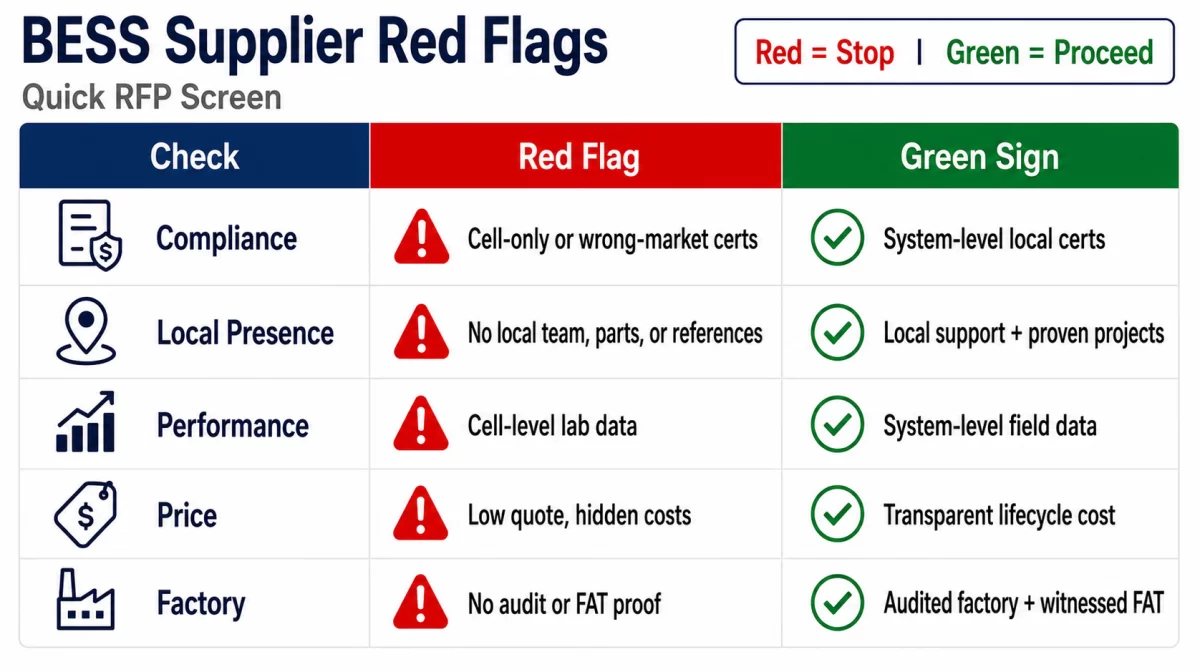
Preden se odločite, zahtevajte jasne certifikate, sledljive podatke, podrobnosti o garanciji in reference projektov. Dobavitelj, ki te zahteve obravnava kot nenavadne, je na vprašanje že odgovoril. Lahko tudi kontaktirajte ESYsunhome zahtevati certifikate, specifikacije izdelkov, garancijske pogoje in reference projektov, ki so pomembne za vašo prijavo.
Zaključek
Sistem BESS je zaveza za obdobje 10- do 15 let, dobavitelj, ki ga izberete, pa je vključen v celotno obdobje: varnost, stroški, zmogljivost, tveganje. Svoj ožji izbor preverite na zgornjem kontrolnem seznamu, zahtevajte dokumente, ki jih lahko preverite pri viru, in potrdite, da sistem izpolnjuje zahteve trga, kjer bo deloval. Primerjajte odgovore drug ob drugem in izbira se bo naredila sama.
Pogosto zastavljena vprašanja
Katere certifikate mora imeti dobavitelj baterijskih shranjevalnikov energije?
Predpisi se razlikujejo glede na državo, zato se za posebne zahteve posvetujte z ustreznim lokalnim organom ali registrom odobrenih izdelkov. V Avstraliji je mogoče upravičene izdelke preveriti na seznamih odobrenih izdelkov Sveta za čisto energijo.
Kaj so baterijske celice Tier 1?
“Baterijske celice ”Tier 1« se običajno nanašajo na celice proizvajalcev, ki so navedeni na seznamu Energy Storage Tier 1 agencije BloombergNEF. Ta seznam se nanaša predvsem na primerljivost za banke, ne pa na neposredno razvrstitev kakovosti. Preprosto povedano, kaže, da je proizvajalec dobavil resnične projekte shranjevanja energije, da so bili njegovi izdelki sprejeti v financirane projekte in da ima podjetje lastne proizvodne obrate. Vendar pa Tier 1 ne pomeni, da je vsaka baterijska celica samodejno visoke kakovosti ali brez napak. Uporabiti jo je treba kot prvi filter pri izbiri dobavitelja, ne kot končni dokaz. Kupci naj še vedno preverijo kakovost celice, sledljivost serije, poročila o preskusih in celoten postopek nadzora kakovosti.